
 01768 369282
 furniture@oakandpineonline.co.uk
No products in the basket.


Buy Furniture, Mango Furniture
What is mango wood? A complete guide to this popular furniture material
02
Nov
Nov
What this article is about
Mango wood is timber from the mango tree, Mangifera indica. It is a hardwood with a warm base colour and grain that can range from quite even to highly patterned. It is used for furniture in many styles. The exact appearance and performance depend on the timber, construction and finish, so check the details of the piece you are buying.
Where does mango wood come from?
Mango trees are grown for their fruit across tropical and subtropical regions. The accepted botanical range of Mangifera indica is native from Assam to southern Yunnan, according to the Royal Botanic Gardens, Kew. The tree is now cultivated much more widely, so the place where a mango tree is native does not tell you where a particular furniture item was grown or made.
The timber is a secondary use of a tree better known for its fruit. The Wood Database notes that some mango plantations harvest trees for lumber after their useful fruit-bearing life. That does not describe every item sold as mango wood. If the source matters, look for a product-specific statement rather than assuming the timber came from a former orchard.
After a tree is felled, the wood is sawn, dried and made into components. These steps affect the look and performance of a finished piece. Two items in the same range can still differ in grain, colour and construction.
Is mango wood a hardwood?
Yes. Mango is a hardwood in the botanical sense: it comes from a broad-leaved flowering tree. The word does not mean that every hardwood is equally dense or resistant to dents. Mango is also workable, which suits shaped or patterned furniture.
A useful reference point is the Janka hardness test. The Wood Database lists mango at about 1,070 pounds-force (lbf). The test measures the force needed to press a steel ball into a wood sample. It can help compare samples, but it does not predict how long a finished table will last on its own. The design, joinery, thickness, finish and day-to-day care all matter too.
For context, the same database lists English oak at about 1,120 lbf. Those figures are close, and they apply to named reference species rather than every kind of oak or every piece of mango. Our guide to mango wood versus oak explains the comparison in more detail.
What does mango wood look like?
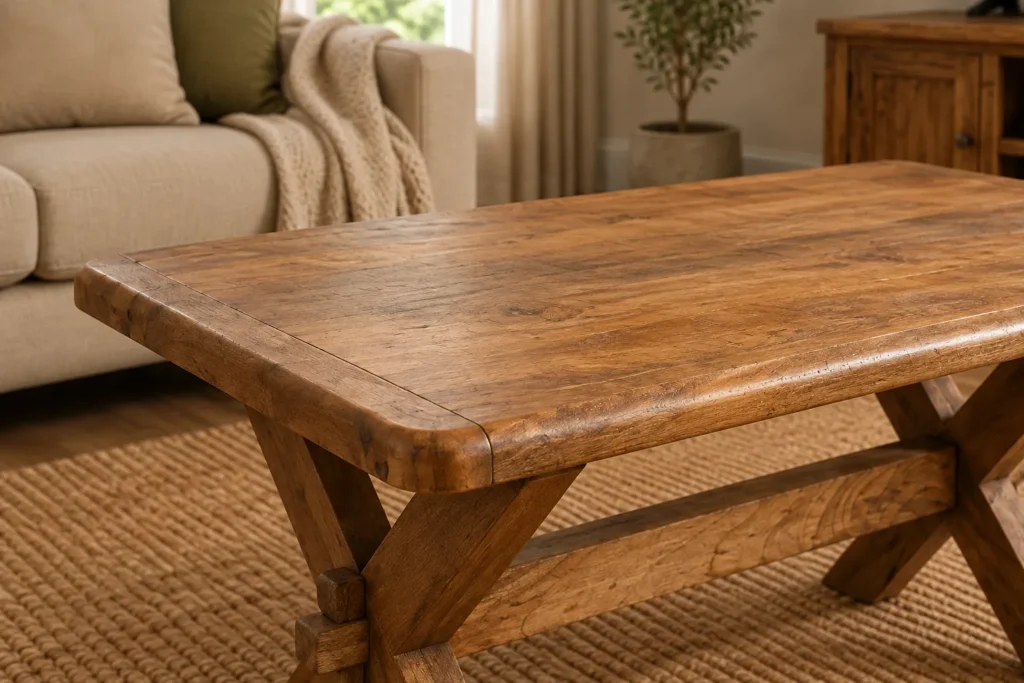
Mango wood often has a golden or medium-brown base, but it is not a uniform colour. The heartwood can include yellow areas and streaks of pink or black. Some boards show spalting, a natural pattern created by fungal activity in the wood. Straight grain is possible, but interlocked, curly or mottled grain also occurs.
That variation is part of the material’s appeal, but it means the same finish can look different across two pieces. A photograph may not show every change in tone, and a coating can make the colour appear warmer, darker or more even. Check the images and finish notes for the item, or visit the showroom to see the grain in person.
Oak & Pine’s mango collections show how much the design can change the look. Agra uses a parquet herringbone pattern; Kodi has a sunburst design; Raipur has a distressed finish; Odisha keeps a more natural-looking character; Scandinavian Mango takes a cleaner, simpler direction; and Amereli combines mango with metal. The wood gives each range a related warmth, while the pattern, finish and other materials create a different effect.
Solid mango wood or mango veneer: what is the difference?
Solid mango wood means a component is made from mango timber through its thickness. Mango veneer is a thin layer of real mango wood attached to a core material. Furniture can combine solid timber with veneered or manufactured panels, so the label alone does not tell you everything about its quality.
Read the materials information for the top, sides, shelves, drawer fronts, drawer bases and back panel. If a product page says that a table has a mango wood top, do not assume that every other component is made in the same way. Ask the retailer if the listing does not make the construction clear. This is particularly useful if you want to understand how the piece could be repaired or refinished later.
How is mango wood furniture made?
Timber is dried before it is made into furniture. Wood continues to exchange moisture with the surrounding air, so it can expand or shrink as humidity changes. The US Forest Service explains that careful drying, handling, storage and design help keep these changes manageable. A finish can slow moisture exchange, but cannot stop it completely.
Drying methods and construction vary between manufacturers. Do not assume a piece is kiln dried unless its product information confirms this. Ask how it is dried, which parts are mango, what finish is applied and which care instructions to follow.
The grain affects how a maker works the material. Interlocked or irregular grain can take more care when cut, while mango generally glues and finishes well. Its workability suits simple furniture as well as carved or patterned details.
What is mango wood good for?
Mango is used for indoor furniture including dining tables, coffee tables, sideboards, bedside tables, chests of drawers and TV units. The Wood Database lists furniture among its common uses. Its varied colour and grain suit pieces where the timber is meant to be seen, while its workability supports a broad range of shapes and decorative treatments.
When choosing a piece, start with the job it needs to do. A dining table needs a surface and finish that suit regular meals. A sideboard or TV unit needs the storage and cable access you require. For a hallway, the footprint and depth may matter more than the overall size of the room. Then choose a design that works with your existing furniture.
If you want to compare the styles within Oak & Pine’s mango-focused collection, browse the Agra Herringbone, Kodi Sunburst, Odisha, Raipur Distressed, Scandinavian Mango and Amereli Mango and Steel ranges. The mango wood furniture collection includes pieces for living, dining and bedroom spaces. Check each product page for its dimensions, material details, finish and delivery information.
Things to know before you buy
Expect natural variation in grain, colour and figure, even within a range. Screens and home lighting can also change how a finish appears. If a close colour match matters, ask whether the product images are representative or view the item in person.
Check dimensions against the room, doorways and stairs. A large table may be hard to manoeuvre even when it fits in the space. Finished weight depends on size and construction, so use the product listing rather than a general figure for the wood.
Mango furniture is generally intended for indoor use unless a product is specifically described as suitable for outdoors. Keep it away from prolonged moisture and strong, direct heat, and follow the care instructions supplied with the item. Our guide to caring for mango wood furniture covers routine cleaning and simple precautions.
Price depends on more than the timber. Size, construction, finish and design all affect the cost. Compare pieces with similar dimensions and features, and check the product description rather than treating the wood name as a complete quality rating.
Is mango wood sustainable?
Mango is cultivated as a fruit tree, and some timber is used after fruit production declines. That can make use of a material that might otherwise have a more limited purpose, but the claim needs to be supported by information about the particular supply chain. The species name alone does not prove that a product is responsibly sourced. Read Oak & Pine’s article on mango wood and sustainability, and ask the retailer where the timber for a specific piece comes from.
Frequently asked questions
Is mango wood furniture durable?
Mango is a hardwood used for furniture, but durability depends on more than the species. The design, construction, finish and care affect how a particular item stands up to regular use. The Janka figure is a comparison of sample hardness, not a guarantee of furniture lifespan. Follow the care guidance for the product you choose.
What colour is mango wood?
Mango wood commonly has a golden-brown base, but yellow areas and pink or dark streaks can appear. Some boards have mottled or spalted patterns. The finish also changes the final appearance, so use the individual product photographs and finish description as your guide rather than expecting every mango item to match.
Does mango wood go with oak?
Yes. Mango and oak can work together because both can have warm brown tones, though the exact shades and grain patterns vary. Repeat a colour or finish elsewhere in the room, and give each piece some space so the different patterns feel intentional. For a closer comparison, see our guide to mango wood versus oak.
Is mango wood expensive?
There is no single price for mango wood furniture. A small bedside table and a large dining table use different amounts of timber and require different construction. Finish and design matter as well. Compare current products by size, features and materials, then check delivery costs and terms before deciding.
Why you can trust us
Oak & Pine focuses its furniture collection on mango wood. At the Kirkby Stephen showroom, visitors can see selected pieces, open drawers and look closely at the grain and finish. The team can answer questions about the materials and specifications of individual products. The showroom is at Unit 13, Kirkby Stephen Business Park, St Luke’s Road, Kirkby Stephen, CA17 4HT.
Explore the mango wood collection
Browse Oak & Pine’s mango wood furniture to compare styles for living, dining and bedroom spaces. If you are unsure which finish or dimensions will work in your home, contact the team or visit the showroom before ordering.
