
 01768 369282
 furniture@oakandpineonline.co.uk
No products in the basket.


Buy Furniture, Mango Furniture
Mango wood vs oak: which wood is right for your home?
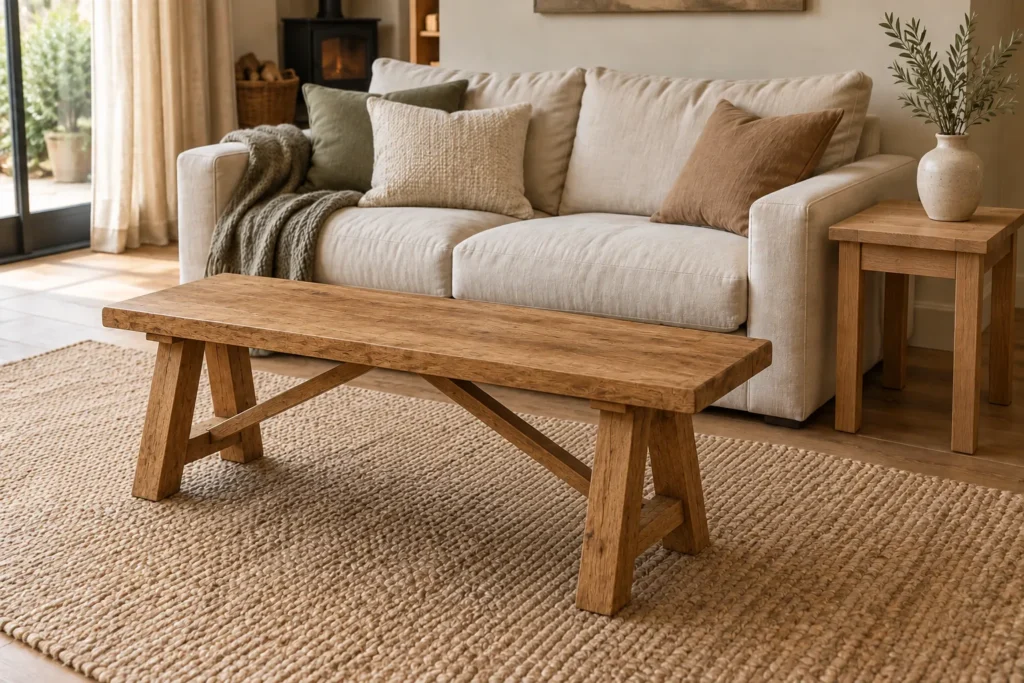
02
Nov
Nov
What this article is about
Mango and oak are both hardwoods, and the hardness figures for mango and English oak are close. Their appearance differs: mango often has warmer colour variation, while oak can show a straighter grain and ray fleck. The right choice depends on the piece, finish and room. Oak & Pine now focuses its furniture collection on mango wood.
Mango wood and oak at a glance
| Feature | Mango wood | English oak (Quercus robur) |
| Named species | Mangifera indica | Quercus robur |
| Janka hardness | About 1,070 lbf | About 1,120 lbf |
| Average dried weight | About 675 kg/m³ | About 675 kg/m³ |
| Typical colour | Golden brown; yellow, pink or dark streaks may occur | Light to medium brown; may have an olive cast |
| Grain and figure | Straight or interlocked; mottling or spalting can occur | Straight; ray fleck may show in quarter-sawn boards |
The figures above use the Wood Database profile for mango and its profile for English oak. Oak covers many species, so English oak is a named point of comparison, not a universal value for every oak product. The Janka test measures resistance to indentation in a wood sample; finished furniture can behave differently depending on construction, finish and use.
Hardness and everyday durability
The Wood Database gives mango a Janka hardness of about 1,070 lbf and English oak about 1,120 lbf. The difference between those reference figures is small. It would be misleading to say that every oak item is much harder wearing than every mango item, or to treat either number as a promise about the life of a table.
Janka testing measures the force needed to press a steel ball into a sample of wood. It is one useful comparison, but it does not include the thickness of a table top, the construction of its joints, the finish or the way it is used. A well-designed piece in either wood can suit a family home, provided its surface and care instructions match the way you plan to use it.
For a dining table, think about spills, hot dishes, children’s activities and how much daily wear the surface will receive. Use coasters and placemats where recommended, wipe spills promptly and follow the maker’s care advice. The shape, edge design, support and finish may be more useful decision points than a small difference between two sample hardness figures.
Grain, colour and character
Mango wood is known for variation. Its heartwood is often golden brown, with possible yellow areas and streaks of pink or black. Grain can be straight or interlocked, and some boards show curl, mottling or spalting. A finish may deepen or soften these colours, so there is no single shade that every mango piece will match.
English oak is generally light to medium brown, sometimes with an olive cast. Quarter-sawn boards can show ray fleck, a distinctive pattern created by the wood’s rays. The exact colour depends on the species, how the board was cut and the finish applied. If you are matching a new piece to furniture already in your home, compare product photographs carefully or view the finish in person.
Mango tends to bring more visible colour variation and pattern into a room. Oak can read as calmer or more linear, although oak furniture can also be highly figured. Choose by the visual effect you want rather than assuming that one wood always looks rustic and the other always looks formal.
Weight: are they different?
The Wood Database lists the average dried weight of mango and English oak at about 675 kg/m³ for its reference samples. That does not mean a mango cabinet and an oak cabinet will weigh the same. Their dimensions, construction, panels, drawers, hardware and moisture content all affect the finished item. Use the product’s stated weight when planning delivery or moving furniture.
This is another reason to be precise about species. A general label such as oak does not tell you exactly which wood has been used, and a single density figure should not be applied to every oak product. The two reference values help make a narrow comparison, not a substitute for a product specification.
Price: compare the whole piece
There is no reliable rule that every mango item costs less than every oak item. Price depends on size, construction, finish, design and the retailer. A simple side table and a large dining table are not comparable simply because they use the same wood, and two pieces with the same dimensions may still differ in their components and detailing.
Oak & Pine’s current furniture focus is mango wood, so this guide does not present an Oak & Pine oak-versus-mango price comparison. If you are comparing products from different retailers, check the exact timber species, dimensions, construction, finish, delivery and warranty terms. That gives you a more useful basis for judging value than the wood label alone.
Care and maintenance
Both materials need care suited to their finish and construction. Keep wooden furniture away from prolonged moisture and direct heat, use mats or coasters where appropriate, and clean with the method recommended by the seller. Do not apply oil, wax or polish unless the care instructions say it is suitable for the finish on that item.
Mango’s natural grain can include high-contrast areas that look different after a mark or scratch, while oak has its own variation and finish requirements. Oak & Pine’s guide to caring for mango wood covers day-to-day cleaning and precautions for mango furniture. For an oak item, follow the instructions from the retailer or maker who supplied it.
Which wood might suit each room?
| Piece or room | Mango may suit when… | Oak may suit when… |
| Dining table | You want warm, varied grain or decorative detail; check the finish. | The specific oak item’s finish and size suit the room and use. |
| Living room | You want colour variation in a coffee table or sideboard. | You want to match oak furniture you already own. |
| TV unit or storage | The mango design has the storage layout and dimensions you need. | The oak unit has the features and dimensions you need. |
| Bedroom or hallway | You want a warm tone and have checked the available space. | You prefer the item’s particular grain and finish. |
These are starting points rather than rules. A piece’s design, finish, size and construction affect whether it suits a room. If you want to see how different mango tones and patterns work, browse Oak & Pine’s mango wood furniture collection and the Agra Herringbone, Odisha, Raipur Distressed and Scandinavian Mango ranges.
Can you mix mango wood with oak?
Yes. The woods do not need to match exactly to work in the same room. Start with one piece as the main feature, then repeat one detail elsewhere, such as a warm undertone, a black metal finish or a related shape. A rug, painted unit or upholstered chair can create a visual pause between different grain patterns.
If the oak in your room is very pale and the mango is strongly patterned, let one of them take the lead. If both pieces are visually busy, use simpler accessories around them. The aim is to make the combination feel intentional, not to find two pieces that look as if they came from the same set.
Oak & Pine’s collection now focuses on mango furniture, but a mango piece can still sit comfortably alongside oak furniture you already own. If you are uncertain about the tone, compare the finish in daylight or visit the showroom to look at the mango pieces in person.
Frequently asked questions
Is mango wood as hard as oak?
The Wood Database lists mango at about 1,070 lbf and English oak at about 1,120 lbf on the Janka scale. Those figures are close, but they describe specific reference species. Janka hardness does not predict a whole item’s lifespan, which also depends on construction, finish and care.
Does mango wood go with oak?
Yes. Mango’s warmer colour variation can sit well beside oak, especially when you repeat a tone or finish elsewhere in the room. The actual shades vary, so compare the individual items in natural light. A rug, painted piece or upholstery can help separate two different grain patterns.
Which is cheaper, mango or oak?
Neither wood is always cheaper. The price of a finished piece depends on its size, construction, finish, design and seller. Compare items with similar dimensions and features, and check what each product description says about its materials before deciding which offers better value.
Which wood lasts longer?
The species name alone cannot answer this. The quality of the design, construction, finish and care all affect how long furniture remains in good condition. Use the supplied care instructions and choose a piece intended for the level of use it will receive.
Why you can trust us
Oak & Pine has narrowed its furniture focus to mango wood. The Kirkby Stephen showroom displays selected pieces, where visitors can look closely at the grain and finishes before choosing. The team can help with questions about the specifications of individual products.
Explore mango wood furniture
If mango’s colour, grain and range of designs suit your home, browse Oak & Pine’s mango wood collection. Check the dimensions and product details, or contact the team if you would like help choosing a piece.
